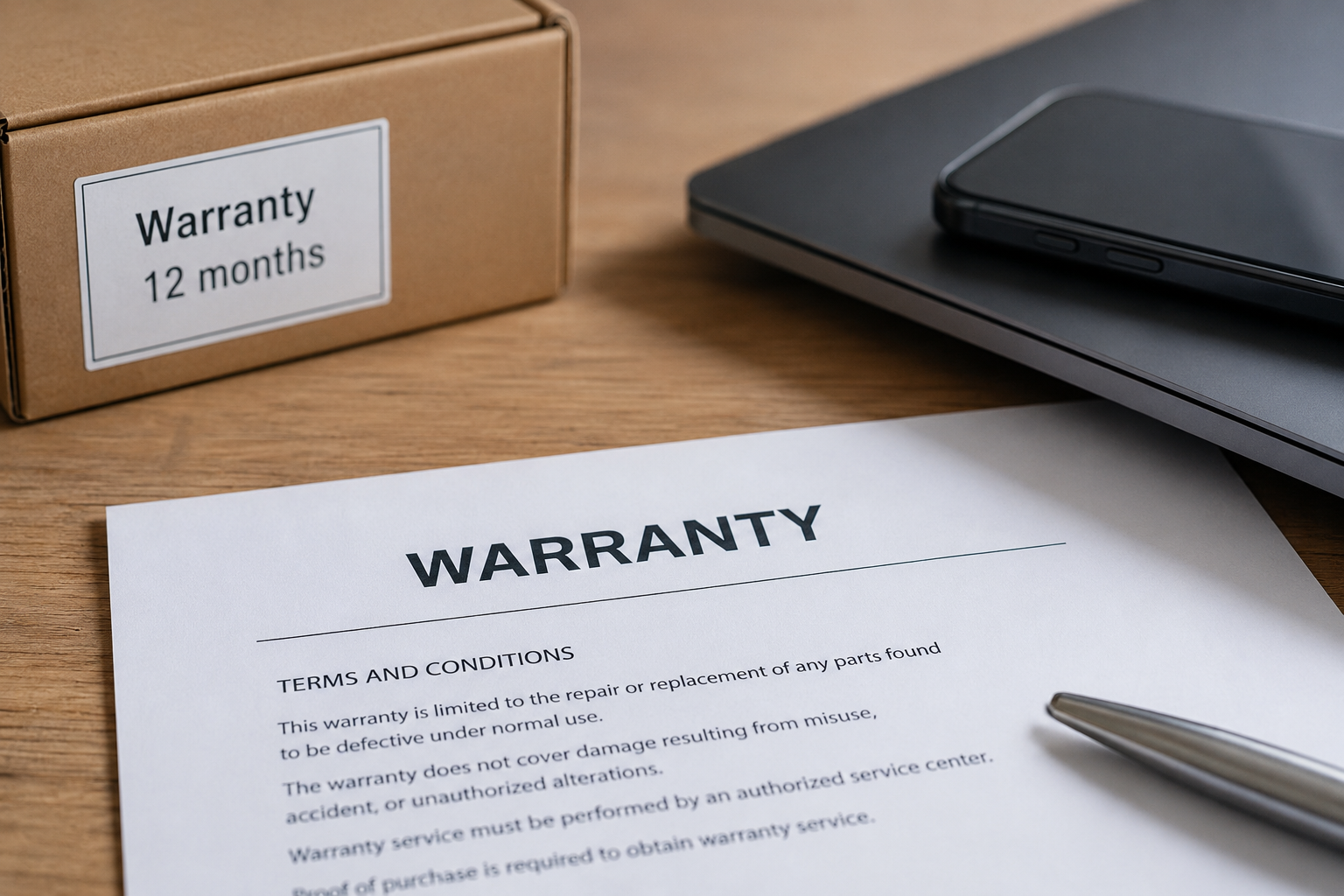
Warranties Are Shrinking
Warranty length used to feel predictable. You bought a laptop, got two years of coverage, and moved on. That pattern is breaking. Apple, Samsung, and Dell mostly anchor at 12 months for standard coverage on many devices, with extensions sold separately.
In Germany and across the EU, legal guarantees still sit at 24 months under consumer law. But even there, manufacturers often limit what counts as a defect after the first year. The paperwork matters more than the promise.
Short coverage wins. Companies cut exposure quietly across categories.
Appliances tell the same story. Bosch and Whirlpool often advertise 12–24 months, while repair costs for a single control board can reach €200 or more.
Five words tell the shift.
The gap between coverage and reality keeps widening. Batteries, hinges, and screens fail outside the protected window more often than before. You feel it when the invoice arrives…
What Buyers Miss
Most people assume warranty equals protection. It does not. It is a contract with limits, exclusions, and timing rules that rarely show up in ads.
Retailers also blur responsibility. Buy a TV from MediaMarkt or Amazon, and you may deal with the manufacturer for repairs, not the seller. That split confuses returns when something breaks at month 14.
Short return windows hide damage patterns. A defect that appears on day 31 is already outside store policies in many cases, even if the warranty technically applies.
Short coverage shifts risk. The buyer absorbs it.
Extended warranties fill the gap, but they are often priced at 10–30% of the product cost. That changes the math quickly on mid-range electronics.
Some consumers never read exclusions. Water damage, battery wear, and cosmetic issues are often excluded entirely, even in premium devices.
How To Check Coverage
Check Purchase Date Rules
Warranty clocks usually start at purchase, not delivery. That difference matters when shipping delays stretch 7–14 days. Always confirm the start date on your invoice.
Many manufacturers require proof of purchase within 30 days for activation. Miss that window and support can get complicated fast.
Timing defines protection.
Compare Manufacturer Vs Retailer
Retail warranties and manufacturer warranties are not the same thing. Retailers like MediaMarkt or Saturn may offer 14–30 day return handling, while manufacturers handle long-term defects.
When something fails at month 10, the store is often out of the picture.
That separation surprises people.
Register Product Online
Brands like HP, Lenovo, and LG often extend coverage by 3–6 months if the product is registered online. Registration also speeds up service claims.
Without registration, serial tracking becomes manual and slower during disputes.
Simple step, fewer delays.
Check EU Legal Rules
EU law provides a 24-month minimum guarantee for consumer goods. In Germany, sellers must repair or replace faulty goods during this period unless they prove misuse.
After the first 12 months, the burden of proof can shift to the buyer in some cases. That detail changes how claims succeed.
Legal coverage helps. But only partially.
Track Serial Numbers
Serial numbers decide eligibility more than receipts in many cases. A missing or unreadable serial tag can block claims even within warranty.
Take a photo at purchase. Store it somewhere simple. Cloud folders work better than email chains that get buried in 300 messages.
Small habit. Big friction saved.
Read Exclusion Lists
Exclusions define the real warranty, not the headline. Apple excludes liquid damage unless covered under AppleCare+. Samsung often excludes physical cracks unless tied to manufacturing faults.
Even “1-year warranty” can shrink quickly once exclusions apply.
Read line by line.
Use Credit Card Protection
Some credit cards extend manufacturer warranties by 12–24 months. American Express and certain Visa Infinite cards include purchase protection and extended coverage features.
This layer can double protection on electronics without buying separate insurance.
It is rarely used.
Real Warranty Cases
A customer bought a €1,200 LG OLED TV in Berlin. The panel failed at month 18. Manufacturer warranty had ended at 12 months, but EU law forced repair because the defect was deemed pre-existing. Repair cost: €0 instead of €480.
Another case involved a Dell laptop purchased for €999. The hinge failed at month 13. Warranty claim was denied due to “mechanical wear exclusion.” Repair cost landed at €180 through an independent shop.
Same timeline. Different outcome.
A third example came from Bosch appliances. A washing machine motor issue appeared at month 20. Coverage applied under EU rules, but only after proof that installation was correct. Documentation saved the claim.
Warranty Comparison
| Category | Length | Risk | Note |
|---|---|---|---|
| Smartphones | 12 Months | High | Battery wear excluded |
| Laptops | 12–24 Months | Medium | Hinge issues common |
| Appliances | 24 Months EU | Medium | Install proof needed |
| Furniture | 12–60 Months | Low | Wear exclusions high |
Common Warranty Mistakes
People assume longer coverage equals better protection. Not always. Coverage terms decide outcomes more than duration.
Another mistake is ignoring proof requirements. Without receipts, serial numbers, or registration, claims slow down or fail entirely.
Some buyers forget regional differences. A product bought online from another EU country may still qualify under local law, but the process changes depending on the seller location.
Extended warranties get oversold.
Retailers often present them as safety nets, but many overlap with manufacturer coverage during the same period. That creates duplicate protection rather than added value.
Late reporting also breaks claims. Waiting weeks after noticing a fault reduces success rates because damage attribution becomes unclear.
FAQ
How long are product warranties usually?
Most electronics carry 12 months of manufacturer coverage. In the EU, legal protection extends to 24 months, though conditions may vary after the first year.
Do I need extended warranty?
It depends on product cost and risk. For low-cost items under €200, extended plans rarely pay off. For laptops or appliances, it may help if exclusions are limited.
Does EU law override warranty terms?
Yes. EU consumer law guarantees a minimum 24-month protection period for defects. However, proving the fault may shift to the buyer after 12 months.
What voids a warranty?
Physical damage, water exposure, unauthorized repairs, and missing serial numbers are common reasons claims get rejected by manufacturers.
Can credit cards extend warranty?
Some credit cards add 12–24 months of extra coverage on eligible purchases. Terms vary by issuer and often require purchase on the same card.
Author's Insight
I have seen warranty terms shrink quietly across almost every category over the last decade. The change rarely comes with announcements. It appears inside PDFs, footnotes, and revised support pages.
Reading warranty terms used to feel optional. That changed. Now it decides whether a repair costs €0 or €300 after month 13.
If I were buying electronics today, I would check coverage before I check specs. Not after.
Summary
Product warranties are getting shorter, and responsibility is shifting toward the buyer. Legal protections still exist in regions like the EU, but manufacturer limits and exclusions define real-world outcomes. Checking registration rules, exclusion lists, and credit card extensions can significantly reduce repair costs over time.
Always read warranty terms before purchase. Not after failure.