On September 9, 2026, CBS News reported that TSA is considering letting PreCheck members bring full water bottles through security at a select number of airports with newer CT scanners. The officials who described the plan named no airports and gave no firm date beyond "the coming months," and TSA has not announced it. For anyone leaving a US airport, the limit as of October 14, 2026 is the same as before: containers of 3.4 ounces (100 ml) or less, in one quart-size bag. What has changed is abroad. Heathrow, Gatwick, Dublin and other airports with approved scanners now accept containers of up to 2 liters, so the rule you face depends on the airport you depart from.
Key takeaways
- At every US checkpoint, carry-on liquids, gels, aerosols, creams and pastes must be in containers of 3.4 oz (100 ml) or less, all fitting in one quart-size bag. A PreCheck water-bottle exception has been reported but not announced.
- CT scanners change how bags are screened, not the US size limit. PreCheck lanes let you leave 3-1-1 liquids in your bag, and some CT lanes do too, but the 3.4-ounce cap still applies in both.
- Heathrow, Gatwick and Dublin now allow containers of up to 2 liters, while Manchester still caps them at 100 ml. Many EU airports also still apply 100 ml.
- TSA's 12-ounce hand sanitizer allowance from March 2020 is over. Its hand sanitizer page now lists the standard 3.4-ounce limit.
- Formula, breast milk and medically necessary liquids are allowed above the usual limit in the US, UK and EU, with conditions. TSA requires you to declare them, UK airports cap each container at 2 liters and want proof of prescription for liquid medicine over 100 ml, and UK rules allow formula in hand luggage only when the baby is traveling.
What it means for you
- US domestic flyers: pack exactly as before. No full-size bottles, and keep reusable water bottles empty until after security.
- Flying out of UK airports: the limit depends on the airport. You may be able to take 2-liter containers at Heathrow, but not on the way out of Manchester. The airport table below shows examples.
- Flying out of EU airports: plan for 100 ml unless your departure airport says otherwise on its own website.
- Connecting with duty-free liquids: a sealed, tamper-evident bag with its receipt can get larger bottles through a US connection, but only if every TSA condition is met.
- Parents with baby formula or breast milk: the exemption still applies, but its conditions differ. At TSA, tell the officer at the start of screening and expect separate checks. In the UK, formula needs the baby on the trip, while breast milk does not.
- Travelers with medications: medically necessary liquids over the limit are allowed in reasonable quantities. In the UK, liquid medicine in containers over 100 ml needs proof of prescription.
What TSA has and hasn't changed
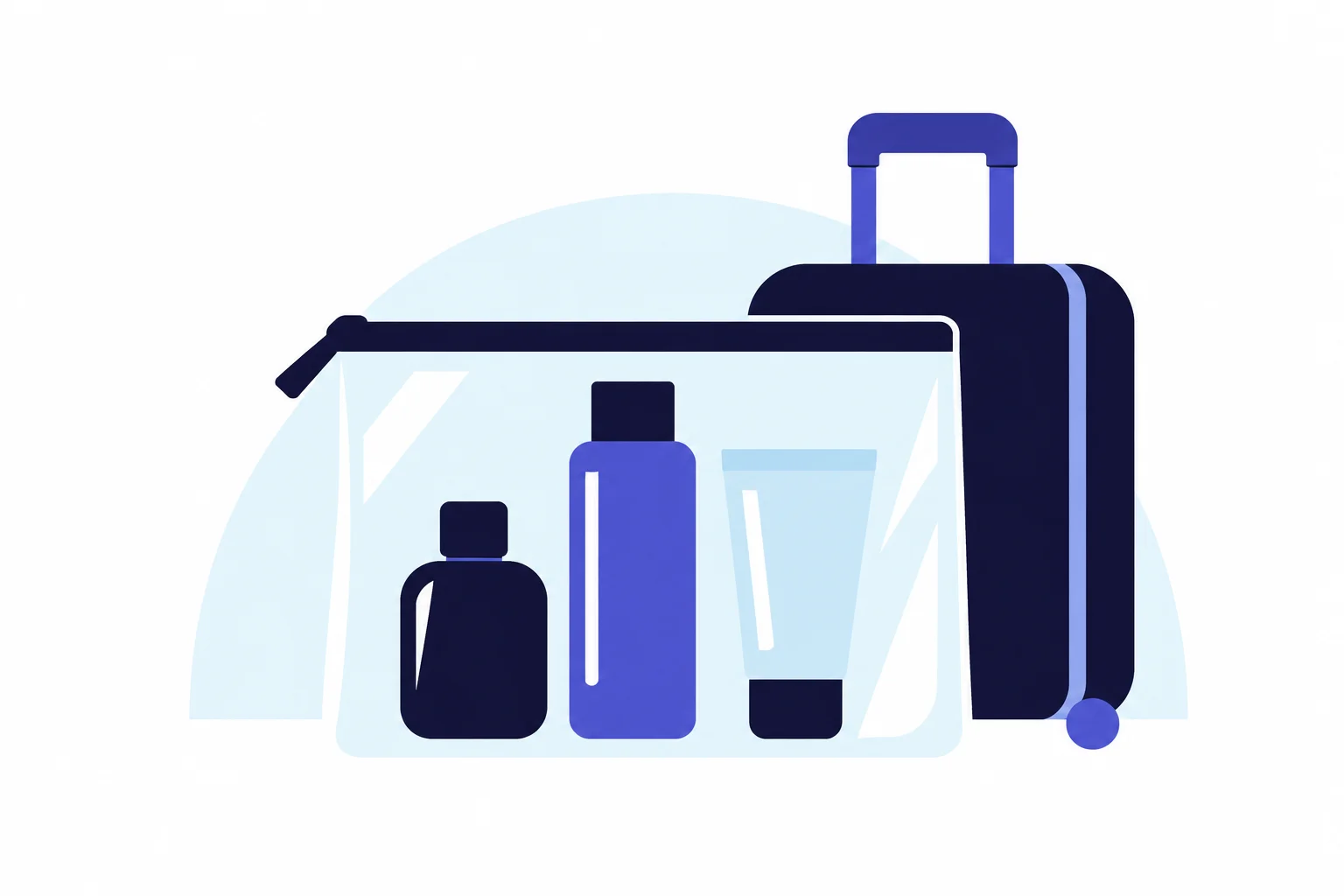
TSA's liquids, aerosols and gels rule still allows a quart-size bag of travel-size containers of 3.4 ounces (100 ml) or less per item. Anything in a larger container goes in checked baggage, and any liquid that sets off an alarm gets extra screening. The limit is set by the container's capacity, not how much is left in it. A half-empty 6-ounce bottle still doesn't qualify.
The water-bottle report, and what it would and wouldn't do
According to the CBS News report, the change under consideration would apply only to PreCheck passengers, only to water, and only at airports with CT scanners and automated detection that can tell water from other liquids. The officials said TSA hasn't bought that equipment at the scale a nationwide rollout would need, doesn't have the funding to do so, and isn't prepared to drop restrictions on all liquids. TSA's press release page listed no liquids announcement as of October 14, 2026.
In July 2025, then-Homeland Security Secretary Kristi Noem told a conference that the liquids rule was under review. CBS News quoted her as saying the size of liquids "may be the next big announcement." That came about a week after DHS ended the shoes-off requirement at US airports on July 8, 2025. No liquids change has followed.
Why CT scanners haven't lifted the US limit
Computed tomography (CT) scanners build a 3-D image of a bag that officers can rotate, and their software flags explosives, including liquids. TSA's CT page says laptops may stay in the bag in CT lanes and describes keeping 3-1-1 liquids inside as a goal. In May 2025 testimony to Congress, TSA said that as of April 2025 it had 968 CT machines at 255 of 432 commercial airports, about 59% of airports. That was an estimated 43% of the equipment needed nationwide, with full deployment not expected until 2043.
Whether you can leave the quart bag inside your carry-on in a standard CT lane depends on the checkpoint, so follow the officer's instructions. The TSA PreCheck page says PreCheck members can leave 3-1-1 liquids in the bag, but the 3.4-ounce cap still applies.
Hand sanitizer is back to 3.4 ounces
In March 2020, TSA began allowing hand sanitizer containers of up to 12 ounces in carry-ons "until further notice." That allowance is gone. TSA's hand sanitizer page, last updated in May 2023, allows hand sanitizer in carry-ons only under the 3-1-1 rule, in containers of 3.4 ounces or less.
UK and EU airports now differ
In Britain, the rule is set airport by airport. The government's GOV.UK liquids guidance says most airports still bar containers over 100 ml, some allow containers of up to 2 liters, and passengers should check every airport on the trip, including the return leg. In June 2024, the Department for Transport reinstated the 100 ml limit at six UK airports that had already dropped it, including London City and Newcastle, calling the step temporary. The department's 2025 screening statistics say UK airports finished rolling out the new checkpoints during 2025, at different times at different airports.
| Departure airport or system | Largest container through security | Separate liquids bag? |
|---|---|---|
| Any US airport (TSA) | 3.4 oz / 100 ml | Yes, one quart-size bag (can stay in the carry-on in PreCheck lanes) |
| London Heathrow (Terminals 2–5) | 2 liters | No. Empty metal or insulated bottles first |
| London Gatwick | 2 liters | No. Empty metal or double-walled containers first |
| Manchester | 100 ml | No. Liquids can stay in the bag |
| Dublin | 2 liters, no limit on the number of items | No |
| EU baseline rule | 100 ml | Yes, one transparent bag of up to 1 liter |
Sources for the rows: Heathrow, Gatwick, Manchester, Dublin Airport and the European Commission's information for air travelers (checked October 14, 2026). Consumer group Which? reported in January 2026 that Edinburgh, Birmingham, Bristol and both Belfast airports had also dropped the 100 ml rule, while Luton and Manchester kept it.
The EU's default is still 100 ml in a one-liter bag. On September 1, 2024, the European Commission brought back the 100 ml limit at airports that had been allowing larger containers with new cabin-baggage scanners. It called the move a precaution to fix a technical issue, not a response to a new threat. In July 2025, the European Commission confirmed to Euronews that easing the limit was "in the pipeline," and trade press reported that airports using one recertified scanner model, including airports in Rome and Milan, could again accept 2-liter containers. Airports using other equipment were still waiting for approval. Neither of the Commission's traveler-facing liquids pages lists which EU airports now allow 2 liters, so the departure airport's own website is the only reliable guide.
Destinations can add limits too: Heathrow says liquids over 100 ml can't be taken on flights to Australia.
Illustrative example: one bottle, three checkpoints
A traveler flies Chicago to London Heathrow, then goes on to Manchester before flying home. In the carry-on are a 250 ml (about 8.5 oz) bottle of sunscreen and a 75 ml tube of toothpaste.
- At Chicago (TSA), the toothpaste fits the 3.4-ounce rule. The sunscreen is about 2.5 times the limit and has to go in checked baggage.
- At Heathrow, both can stay in the carry-on, because 250 ml is well under 2 liters.
- At Manchester, the sunscreen fails the 100 ml cap again and would be taken at security.
The same bottle passes one checkpoint out of three, so pack for the strictest airport on your itinerary.
What counts as a liquid
TSA's rule covers liquids, aerosols, gels, creams and pastes, and GOV.UK's list of liquids includes soup, jam, honey, mascara, lip gloss, toothpaste and contact lens solution. TSA's item pages show where the line falls:
| Item | TSA carry-on rule |
|---|---|
| Peanut butter, honey | 3.4 oz or less |
| Creamy cheese, creamy dips and spreads | 3.4 oz or less (solid cheese is allowed without the liquids limit) |
| Solid deodorant, bar soap | Allowed, not subject to 3-1-1 |
| Ice and frozen liquids | Allowed only if frozen solid. Slushy or partly melted items fall under 3-1-1 |
| Contact lens solution | Larger amounts allowed as medically necessary if declared, but some solutions alarm. TSA recommends checking bottles over 3.4 oz |
Solid toiletries, such as shampoo bars and bar soap, free up space in the quart bag on any itinerary.
Duty-free, baby milk and medicine
Duty-free liquids on a connection
If you land in the US from abroad and connect to another flight, you go through TSA screening again. Under TSA's rule, duty-free liquids over 3.4 oz can stay in your carry-on only if they were bought abroad, were sealed by the retailer in a transparent, tamper-evident bag that shows no sign of tampering, and come with the original receipt dated within the past 48 hours. Items that alarm or can't be screened are not allowed. TSA recommends packing them in checked baggage anyway. Flying the other way, the Commission's liquids page, which describes the rules adopted in 2013 and 2014, accepts sealed duty-free bags bought airside at international airports in the US or Canada within the previous 36 hours, with proof of purchase inside the bag. Check with your airline, as the page carries no recent update date. Under GOV.UK rules, the bag must not be opened before your final destination.
Formula, breast milk and baby food
TSA's baby formula guidance treats formula, breast milk, toddler drinks and baby food, including puree pouches, as medically necessary liquids. They are allowed above 3.4 oz and don't need to fit in the quart bag, and your child doesn't have to be traveling with you. Tell the officer at the start of screening, take the items out for separate screening, and expect possible testing. You can ask that they not be X-rayed, but you will then go through additional screening. In the UK, GOV.UK allows breast milk in containers of up to 2,000 ml without the baby present, but formula and sterilized water only if the baby is traveling. Frozen breast milk is not allowed in UK hand luggage.
Liquid medications
TSA allows medically necessary liquids, gels and aerosols in reasonable quantities for the trip. You must declare them and place them in a separate bin. If an alarm can't be resolved, the item may be refused. TSA recommends labeling medications but does not require it. GOV.UK requires proof that liquid medicine in a container over 100 ml is prescribed to you, such as a doctor's letter or a copy of the prescription, and Heathrow asks for one if you need more than 2 liters on the journey. This is general travel information, not medical advice.
Frequently asked questions
Can I bring an empty water bottle through security?
Yes. TSA allows empty water bottles in carry-on and checked bags, so you can refill after screening. At Heathrow and Gatwick, empty metal, insulated or double-walled bottles before security even though other containers up to 2 liters are allowed.
Is there a limit on liquids in checked bags?
There is no 3.4-ounce rule in checked bags, but toiletries are limited. TSA's hand sanitizer page cites an FAA limit on medicinal and toiletry articles, including aerosols: 2 kg or 2 liters in total per person, with no container over 500 ml. Aerosol nozzles must be capped.
Do frozen liquids and ice packs get through?
At TSA checkpoints, frozen items pass if they are frozen solid. Once they turn slushy, they must meet 3-1-1. Gel ice packs for medical needs or breast milk are allowed even if melted, according to TSA's ice pack page. GOV.UK says frozen liquids generally can't be carried in UK hand luggage.
Will unlabeled refillable travel bottles pass?
That depends on the airport. Manchester says refillable containers must have their capacity printed on them, and it rejects unmarked travel sets, handwritten measurements and stickers. Buying bottles with the capacity molded or printed on them avoids an argument at any checkpoint.
Does a 2-liter airport mean I can bring 2 liters home?
Only if your return airport allows it. GOV.UK tells travelers to check the rules at every airport on the trip, including the journey home, and TSA screening on any US connection applies the 3.4-ounce limit. A full-size bottle that leaves Heathrow in your carry-on will not get through a US connection unless it qualifies as sealed duty-free.
Before you pack your carry-on
- List every airport where you will go through security, including connections and the flight home.
- Check each airport's own security page that week. If one of them is a US airport or still caps at 100 ml, pack every carry-on liquid for that limit.
- Use containers of 100 ml or less with the size printed on them, all in one clear quart or one-liter resealable bag.
- Switch to solid toiletries where you can, and put full-size bottles in checked baggage.
- Keep formula, breast milk and liquid medicines separate and easy to reach. For UK departures, carry a prescription or doctor's letter for any liquid medicine in a container over 100 ml.
- Empty water bottles and insulated flasks before screening.
- Keep duty-free liquids sealed in their tamper-evident bag with the receipt until you reach your final destination.
Sources
- CBS News: PreCheck travelers may be able to bring full water bottles (September 2026)
- TSA: Liquids, aerosols and gels rule
- TSA: Press releases
- CBS New York: Noem comments on liquids (July 2025)
- TSA/DHS: DHS to end "shoes-off" travel policy (July 8, 2025)
- TSA: Computed tomography
- TSA testimony to the House Appropriations homeland security subcommittee (May 20, 2025)
- TSA PreCheck
- WHDH: TSA's 12-ounce hand sanitizer allowance (March 2020)
- TSA: Hand sanitizers
- GOV.UK: Hand luggage restrictions, liquids
- Time Out: 100 ml rule re-introduced at six UK airports (June 2024)
- Department for Transport: Air passenger experience of security screening, 2025
- Heathrow: Hand baggage and liquids
- Gatwick: Security screening
- Manchester Airport: Security
- Dublin Airport: Carry-on baggage guidelines
- European Commission: Information for air travellers
- Which?: The UK's airport liquid rules for 2026
- European Commission: Temporary restrictions on liquid screening (July 31, 2024)
- Euronews: EU airports set to ditch 100 ml liquid limit (July 25, 2025)
- Aerospace Global News: EU airports to scrap 100 ml limit, but not all at once (July 2025)
- TSA: Peanut butter
- TSA: Honey
- TSA: Creamy cheese
- TSA: Creamy dips and spreads
- TSA: Solid cheese
- TSA: Solid deodorant
- TSA: Bar soap
- TSA: Ice
- TSA: Contact lens solution
- European Commission: Liquids, aerosols and gels
- TSA: Baby formula
- GOV.UK: Baby food and baby milk
- GOV.UK: Essential medicines and medical equipment
- TSA: Disabilities and medical conditions
- TSA: Empty water bottle
- TSA: Gel ice packs